
Dosing Stations and Water Parameter Analysis
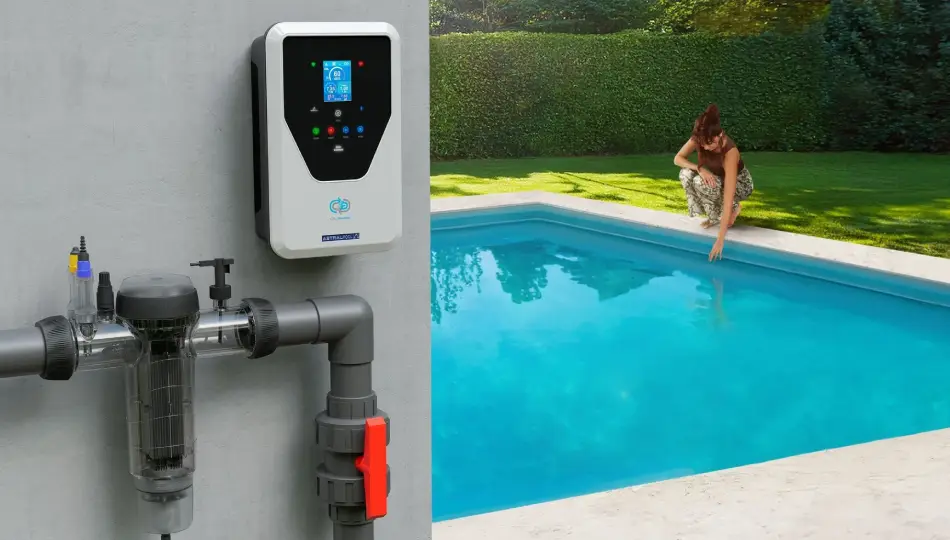
Automation: Who Monitors the Water When You Are Not There?
The water in a swimming pool is a dynamic environment that changes every minute. Swimming, hot sun, or rain instantly affect pH and chlorine levels. Even the most professional service cannot be present at the pool around the clock to manually adjust these changes.
Dosing stations solve the problem of gaps in maintenance. While a specialist may only be on-site a few hours per week, the automation works every second. It acts as your round-the-clock lab technician, ensuring that the water remains safe and perfectly balanced at all times.
1. The Problem of Gaps in Maintenance
Traditional service, where a specialist visits once or twice a week, creates periods when the water parameters go unchecked.
Change dynamics: Water parameters, such as pH and chlorine, can change significantly within a few hours due to intensive swimming or weather conditions.
Gap without control: If maintenance is done one day and the parameters go out of range the next, the water remains outside optimal conditions until the next visit.
Solution: Automated systems react to changes immediately, reducing the time gap and maintaining water stability.
2. Automatic pH Control
This is the first and one of the key stages of automation.
How it works: An electronic probe continuously measures pH. If the level deviates from the set point, for example 7.2, the system adds a small dose of reagent, usually pH-minus, to adjust it.
Why it matters: Chlorine effectiveness directly depends on pH. At high pH, chlorine is much less effective, even if the chlorine level is normal. Automatic systems maintain stable pH, ensuring that disinfection works at maximum efficiency.
3. ORP Control (Oxidation Reduction Potential)
Advanced systems use an ORP sensor to manage chlorine dosing.
How it works: The ORP sensor shows how effectively chlorine is working in the water at any moment. The system responds to the actual water condition rather than a fixed schedule.
Response to load: When contaminants enter the pool, disinfection efficiency decreases, and ORP drops. The system detects this and adds additional chlorine until the disinfection level is restored.
Example: After heavy swimming, ORP decreases. The station automatically increases chlorine dosing and stops when the parameters return to the set level.
4. Dosing Station
Automated systems provide more stable maintenance of water parameters.
Micro-dosing: The station adds reagents in small portions directly into the water flow. This allows the chemicals to be distributed evenly and prevents local concentration spikes.
Advantage over manual dosing: When chemicals are added manually, a large volume enters the pool at once, and until full mixing occurs, local zones with higher concentrations may form.
Safety: Chemicals are dispensed from closed containers through tubing systems, reducing human contact with concentrated reagents.
5. Automation Complements, Not Replaces Service
Automated systems supplement pool maintenance.
Specialist tasks:
- Ensures proper operation of the filter and entire hydraulic system
- Removes physical contaminants that chemicals cannot handle
- Calibrates sensors for accurate dosing
- Detects early-stage issues such as leaks or equipment wear
Collaboration: Automation continuously monitors water parameters, while the specialist is responsible for the technical condition and stability of the entire system.
Important Fact: Less than 1% of Time with Manual Control
On average, a service company checks a pool twice a week, which is about seven hours of actual presence per month. Meanwhile, the pool operates 24/7, approximately 730 hours per month.
Implication: The specialist physically controls the pool less than one percent of the time, while over 99% of the time the system operates independently. During this period, water parameters can deviate from the norm, pH and chlorine fluctuate, and contaminants accumulate.
Conclusion
Automation maintains stable water conditions between service visits, responding almost instantly to changes in real time. However, it does not replace the specialist. The system manages the process, but the human monitors equipment and ensures the overall system operates smoothly.
It is like an autopilot: the system can maintain the course and react to changes, but the pilot is always responsible for safety and decision-making.