
Pool Water Circulation -Main Tansportation System
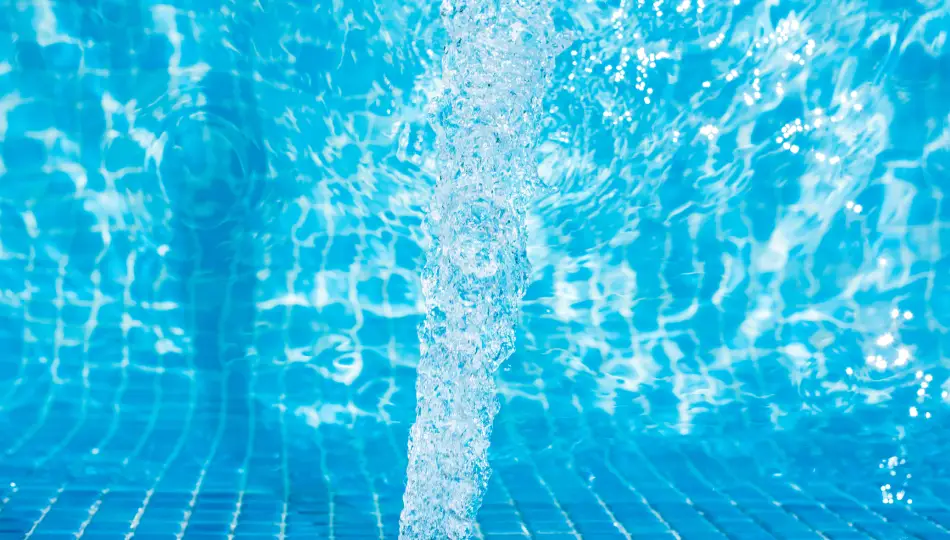
Circulation is the pool’s transportation system.
Even with the correct chlorine level, it must be distributed throughout the entire water volume.
Chemical Delivery: Water must constantly mix. Otherwise, chlorine is consumed locally (where contaminants are present) and cannot evenly distribute across the pool. This can create zones with reduced disinfection.
Contaminant Removal: Circulation directs debris (leaves, hair, skin particles) toward skimmers or the overflow system, and then to the filter. Without movement, some debris settles on the bottom and remains in the water, reducing quality.
Stagnant Zones
These are areas in the pool where water hardly circulates, such as corners, steps, and spaces behind ladders or in niches.
Risks: In these areas, water refreshes slowly, so contaminants accumulate faster and algae or slippery film appear earlier. The main body of water may still show normal parameters, but local conditions are already compromised.
Practical Implication: Testing water from one point (e.g., the pool center) does not always reflect the conditions across the entire pool.
Solution: Correct nozzle orientation creates water movement throughout the pool. Flow should “flush” corners and direct water toward collection points (skimmers or overflow).
Formula for Effectiveness: Chemistry + Filtration + Circulation
Without one of these elements, the system does not function fully.
How it works:
- Chemistry kills microorganisms.
- The filter removes contaminants.
- Circulation distributes chemicals and delivers debris to the filter.
If any element works poorly, the whole system suffers.
Hydraulics: The pump must ensure full water circulation through the filter so that the entire pool volume passes through the system several times per day. One such cycle is called a full turnover — the time it takes for the entire pool volume to pass through the filter. For private pools, 3–4 full turnovers per day are usually sufficient, but higher usage or hot weather may require more.
System Resistance: A dirty filter increases flow resistance. As a result, circulation decreases, and overall system effectiveness drops.
Practical Implication: Even with proper chemical levels, water may not be treated evenly if circulation or filtration is inadequate.
Main System Components
Each component in a pool system has its function. They must work together:
Skimmer / Overflow: Collects water from the surface where debris accumulates, such as oils, dust, and pollen.
Bottom Drain: Draws water from lower layers, helping mix water evenly and prevent stagnation at the bottom.
Pump: Moves water through the system. Its capacity must match the filter and pool volume to ensure proper circulation.
Filter: Removes mechanical contaminants from the water. Everything carried by circulation passes through it.
Controller and Dosing System: Automates the addition of chemicals into the water flow. Dosing usually occurs after filtration (and heating, if present) so the water returning to the pool is already treated.
Thermal Stratification
Without sufficient circulation, pool water can separate by temperature: warm water stays at the surface while cooler water remains at the bottom.
Effects: The top layer heats more and has more contact with sun and air, causing faster chlorine degradation and consumption. The bottom layer mixes poorly, slowing processes.
Importance: Water parameters become uneven across the pool. In different zones, water behaves differently in terms of temperature and treatment efficiency.
Solution: Circulation mixes water, equalizing temperature and chemical composition throughout the pool.
Conclusion
Circulation is the foundation of the pool system. It distributes chemicals throughout the water and delivers contaminants to the filter for removal.
It’s like blood circulation in the body: if movement is impaired, even with all the “right substances,” the system functions poorly.