
Water Testers – How can you know if water is safe?
How can you really know if pool water is safe?
Water clarity is just the tip of the iceberg. Beneath a perfect appearance, invisible processes can occur: excess chemicals or bacterial growth.
To know the true water condition, various monitoring methods are used. Below, we’ll explain the differences between household tests and professional digital laboratories, and why a comprehensive approach is important—from measuring pH to detecting hidden biogenic and inorganic contaminants.
“Biogenic and inorganic contaminants are dissolved substances in water, such as ammonium, nitrates, phosphates (biogenic), and metals like aluminum or copper (inorganic).”
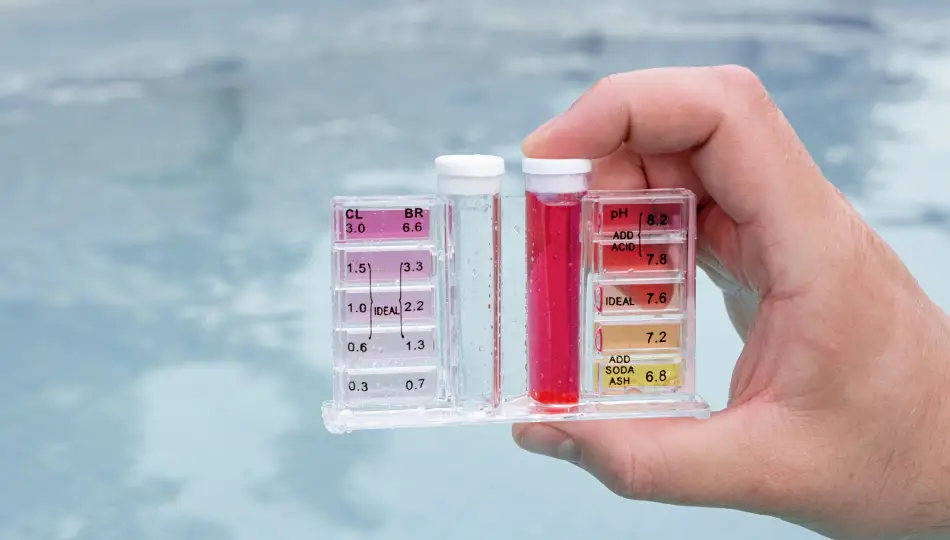
Limitations of Visual Tests (Strips and Droplets)
Test strips and drop tests are convenient for regular checks but have accuracy limits.
Human Factor: Results depend on lighting and color perception. The same test can look different to different people or under different light conditions.
Errors: Reagents can lose accuracy over time, for example, due to humidity. High chlorine levels can distort readings, especially for pH.
Practical Implication: These tests are suitable for everyday monitoring to understand the general situation, but they are insufficient for precise water adjustment.
Correct Approach: Basic monitoring can be done with simple tests, but water should be regularly rechecked with more precise instruments such as photometers, ORP meters, and TDS meters.
Photometer
A photometer provides precise measurements without guessing.
How it works: The device measures how light changes when passing through a water sample with reagent.
Benefit: Results are independent of lighting or color perception, giving objective numerical data instead of a visual estimate.
Analysis Range: Photometers measure key water parameters—chlorine, pH, cyanuric acid—and more complex indicators: metals, phosphates, and microbiology, including Legionella testing (with additional kits).
Turbidity and Suspended Particles
Even in clear water, invisible particles can remain.
Turbidity (NTU): Measures how many fine particles are present in water. These particles can reduce disinfection efficiency by partially shielding microbes from chlorine.
Fine Particles:
- Do not settle on the bottom
- Are not trapped by regular filters
These particles cause persistent cloudiness and reduce water quality.
Practical Implication: Water may look clear, but fine particles can still impede effective disinfection.
Solution: Coagulants and flocculants help remove these particles. Turbidimeters detect problems early and indicate when extra treatment is needed.
Electronic Helpers: pH, ORP, and TDS Meters
These instruments quickly assess key water parameters.
pH Meter: Measures pH accurately and requires regular calibration.
ORP Meter: Shows how effectively chlorine can disinfect at the moment. It’s a fast way to see if disinfection meets current demands.
TDS Meter: Measures total dissolved solids. Higher readings indicate accumulated salts, chemicals, and contaminants.
Practical Implication: Each device shows only one parameter, so they must be used together for a complete picture.
Our technical base allows analysis of over 150 parameters if needed.
Dynamic Changes: Why “Once-a-Week” Checks Aren’t Enough
Pool water is not static—its parameters constantly change.
Temperature: Water heats during the day and cools at night, affecting chemical reaction rates.
Rain and Wind: Rain can lower pH and introduce contaminants; wind brings dust, organic matter, and debris.
Load: Every swimmer introduces organics such as sweat and cosmetics, affecting chlorine consumption and overall water condition.
Conclusion: Water parameters can vary throughout the day, so infrequent measurements do not provide a realistic picture—regular monitoring is essential.
Automatic Parameter Control and Dosing
Modern systems can both measure and maintain water parameters within target ranges automatically.
How it works: Sensors (pH, ORP, etc.) continuously monitor water. If parameters deviate, the system automatically doses the required chemicals.
Benefits:
- Maintains stable water parameters without fluctuations
- Reacts immediately, not days later
- Reduces the risk of over- or under-treatment
Importance: Pool water changes constantly. Manual control reacts with delay; automation responds instantly.
Key Point: Automation does not replace maintenance but ensures constant monitoring between specialist visits.
Conclusion
Water control is a complex task requiring multiple methods and instruments. Each shows only part of the picture.
Depending on the season and conditions, we typically monitor 8–10 key parameters. Daily monitoring requires about three different types of testers. Additional parameters are checked in specific situations.
We also use a compact lab to detect total microbial counts, E. coli, and Pseudomonas aeruginosa, requiring separate equipment and controlled conditions.
Practical Implication: True water quality cannot be assessed with a single test—only by combining multiple data points and interpreting them correctly.
It’s like a medical checkup: temperature, blood pressure, and lab tests show different things, and only together provide a full picture.